As your business grows and thrives, you may find you meet the so-called VAT threshold or the point at which you have to register as a VAT vendor in South Africa. Today, we will look at this process in a little more depth. Remember that you can also voluntarily register as a VAT vendor at a much lower turnover if it will benefit your business. Here’s what you should know.
What Are VAT Vendors in South Africa?
VAT vendors in the South African context are businesses that have registered with SARS as a VAT-registered entity. This means they can then charge output VAT on their client invoices, i.e. you will show a VAT-exclusive and VAT-inclusive amount on your invoices. You will then be responsible for paying over this generated VAT to SARS. However, you can also now offset this VAT liability by deducting the input VAT, or the VAT incurred in manufacturing and developing your goods or services. Think of it as reclaiming the VAT you pay to other businesses as a cost of business. If this amount exceeds the VAT you charge customers, you can even receive a VAT refund from SARS.
All businesses with a taxable turnover that exceeds R1,000,000 in a consecutive 12-month period must register as a VAT vendor with SARS. You can also choose to voluntarily register for VAT once your table turnover exceeds R50,000 in the same 12-month consecutive period.
How Do I Become A VAT Vendor in South Africa?
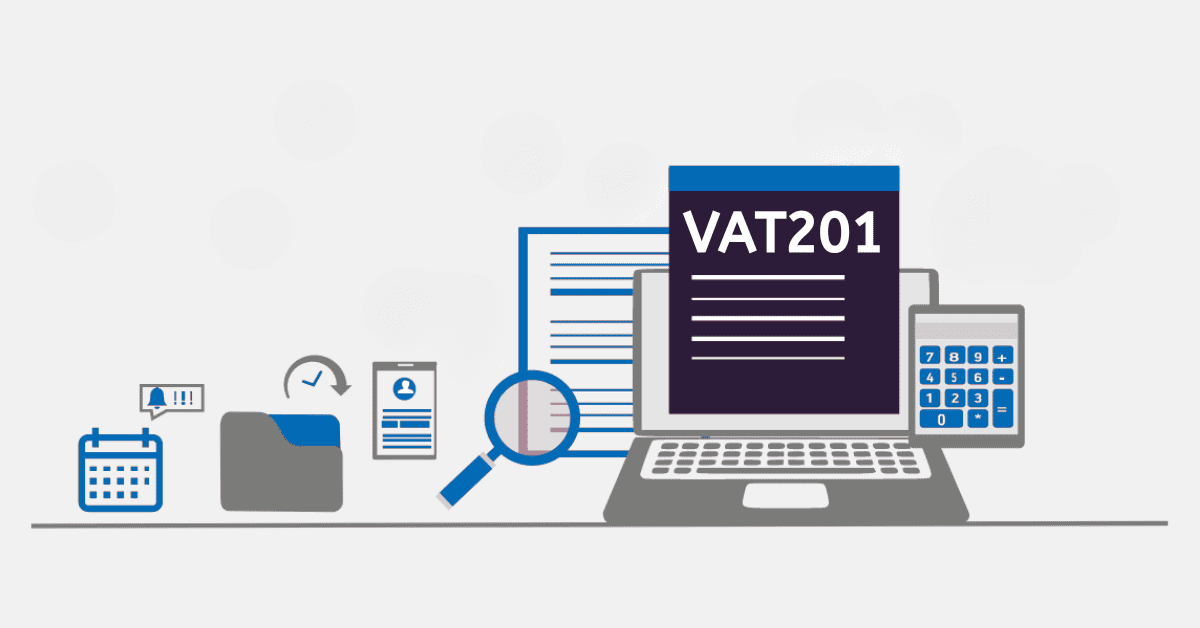
You can register as a VAT vendor via SARS eFiling. You will fill in the VAT101 registration form and submit it online with the required supporting documents. These are your typical proof of doing business, including registration and ID as well as proof of your bank account and address. SARS will then process your application. If successful, you will then receive a VAT103 back from them. This is also called your Notice of Registration as a VAT vendor or your VAT certificate. You will receive a unique VAT number that is entirely separate from your income tax number. You will also be liable to submit a VAT201 return at certain points throughout the year. SARS will inform you what return group you fall into and how often your VAT returns need to be submitted.
How Long Does It Take To Register A VAT Vendor In South Africa?
SARS typically processes your VAT registration pretty quickly. They give their standard 21-day turnaround as a benchmark. However, if your application is seen as low-risk, you could even receive your VAT number and VAT103 form close to immediately. As always, ensuring you submit an accurate form fully completed, with all requested supporting documents, will help ensure the quickest possible turnaround. You can track the process online via eFiling.
What Are The Advantages Of Being A VAT Vendor?
There are some strong business advantages to being a VAT vendor in South Africa. VAT registration lends an air of credibility to your business. It signifies that your business has reached a certain level of turnover and is recognized by SARS as such. This can enhance your reputation in the eyes of customers, suppliers, and potential partners.
VAT vendors can also claim input tax credits on their business expenses. This means that you can recover the VAT paid on goods and services used in the course of your business. This helps reduce your overall tax liability and operating costs in most cases. Being a VAT vendor allows you to include VAT in your sales prices. This means you can compete on a level playing field with other VAT vendors. It also simplifies your pricing structure, as customers are accustomed to prices that include VAT. Claiming these input tax credits can help to improve your cash flow. When you pay VAT on expenses and subsequently recover it, you effectively defer the payment of that VAT down your supply chain. This can free up cash for other business needs. If your input tax exceeds your output tax (i.e., you pay more VAT on expenses than you collect from sales), you can claim a VAT refund from SARS. This can be especially valuable for businesses with high operating costs.
VAT registration can be beneficial for businesses involved in international trade. It allows you to engage in cross-border transactions and recover VAT paid on imports through the VAT refund system. Some government contracts and tenders may require that a business be registered as a VAT vendor. Additionally, many suppliers prefer to work with other VAT-registered businesses because it simplifies their own VAT compliance. This can open doors to a wider network of suppliers, often providing better terms, competitiveness, and quality.
Always remember that VAT registration is not optional when your turnover exceeds the threshold. Complying with the law and registering as a VAT vendor ensures your business operates within a legal framework and stays fully tax-compliant.
For many South African businesses, becoming a VAT vendor opens new doors and helps offset your overall burden of payment in your supply chain.